Dubai has a reputation problem: everyone assumes it's only for people with gold-plated credit cards. Here's the truth — beneath the seven-star hotels sits a city built by and for ordinary workers from around the world, with $1 boat rides, $4 curry houses, and beaches that cost nothing at all. Visit smart and Dubai can cost less per day than many European capitals.
When to visit (this matters more than anywhere)
November to March is glorious — 75–85°F, blue skies, beach weather. It's also peak season, so hotel prices roughly double. The hack: aim for the edges. Late April–May and September–October bring real heat (95°F+) but 40–60% cheaper rooms, and the city is built for it — every metro station, mall, and bus stop is air-conditioned. Just don't book July or August unless your entire plan is malls and waterparks. One more calendar note: during Ramadan, daytime dining options shrink but hotel prices dip noticeably, and the evening iftar atmosphere around the old city is genuinely special.
In practice, the sweet spots are the first half of November and late March — around 88°F, a swimmable sea, and rooms at 60–70% of January prices. Watch the event calendar too: the Dubai Shopping Festival (late December through January) fills hotels but brings free fireworks and concerts, while New Year's week triples even modest Deira rates past $150. Unlike flights, Dubai hotel rates rarely reward six-month planning — booking two to three weeks out usually finds the best prices.
Ride the metro, skip the taxis
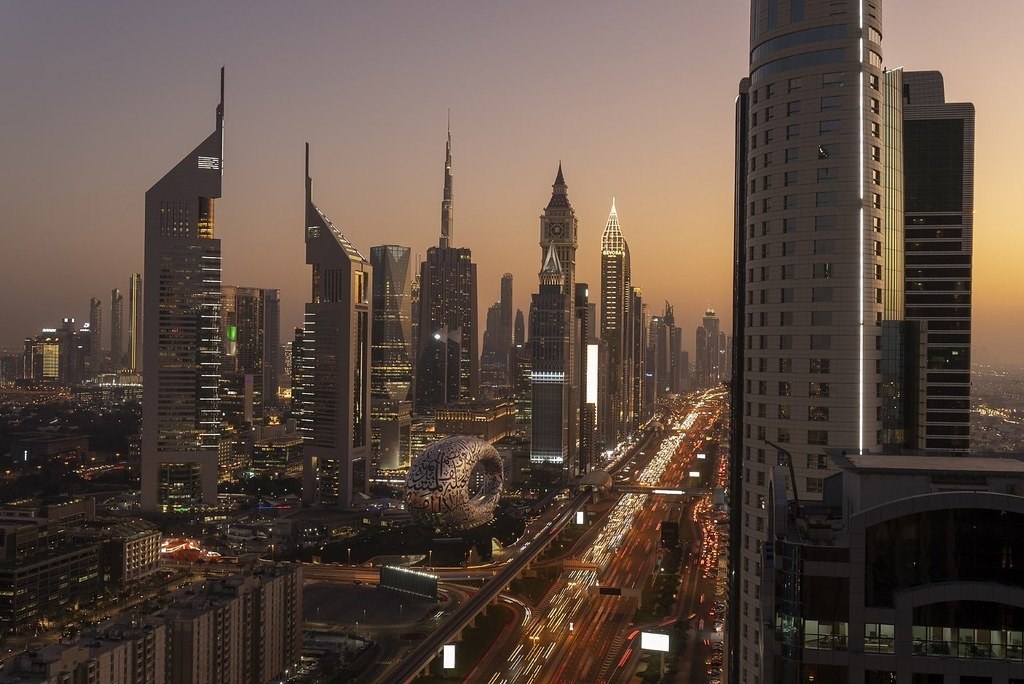
The Dubai Metro is clean, driverless, and absurdly cheap. Grab a rechargeable Nol card ($7, includes credit) and most rides cost $1–2; an all-day pass is about $6. The Red Line strings together nearly everything you came for: Burj Khalifa/Dubai Mall, the Marina, and the Expo site. Taxis from the airport run $20–30 — the metro does the same trip for under $2. The one splurge-worthy ride: the front window seat of the driverless train as it glides past the skyscraper canyon on Sheikh Zayed Road.
A few practical notes: the same Nol card also covers buses, the tram, and even the abra crossings, so one card runs your whole trip. Skip the Gold class carriage — double the fare for the identical ride — and note the clearly marked women-and-children cabin if that's relevant to you. Rush hours (roughly 7:30–9:30am and 5–7pm) pack the Red Line shoulder to shoulder, so time your Burj Khalifa and Mall runs for midday and ride in comfort.
READ MORE: 15 Budget Travel Hacks That Save Real Money
The best of Dubai is free (or nearly)
The Dubai Fountain show — a choreographed water ballet at the foot of the Burj Khalifa — runs every 30 minutes each evening and costs nothing. JBR Beach and Kite Beach are free, complete with skyline views. Wander the Al Fahidi Historical District's wind-tower lanes, then cross Dubai Creek on a wooden abra boat for one dirham — about 27 cents, the best-value ride in the Middle East. Browse the Gold and Spice Souks in Deira (window shopping is a sport here), catch sunset from the Palm's public boardwalk, and in winter, visit Global Village's world pavilions for a $7 entry. Even the Dubai Mall's aquarium tunnel viewpoint and dancing-light displays cost nothing to see.
Three more zero-dollar entries most visitors miss: the Ras Al Khor Wildlife Sanctuary on the city's inland edge, where flamingos wade against the skyline and the viewing hides are free; the Alserkal Avenue arts district in Al Quoz, all free galleries and blessed air-conditioning; and the 4-mile Dubai Marina waterfront walk, best at dusk when the towers switch their lights on. For the fountain show, skip the paid lake boat — the mall-side promenade has the same view for nothing.
Eat like the city actually eats
Dubai's real food scene isn't in hotel restaurants — it's in Karama, Satwa, and Deira, the neighborhoods where the city's Indian, Pakistani, Filipino, and Lebanese communities live. Ravi Restaurant in Satwa is an institution: a feast of Pakistani curries and fresh naan for $5–8. Al Mallah does legendary shawarma ($2–3) and fresh juices. Bu Qtair, a shack near Jumeirah beach, serves the day's catch fried with spices for $8–12. Wash anything down with karak chai — sweet, cardamom-spiced tea for 50 cents. A realistic food budget here is $15–20 a day, eating memorably. Supermarkets like Carrefour also do generous hot-food counters — a full takeaway meal for $4–5 makes an easy beach picnic.
Order conservatively — portions in Karama and Satwa are family-sized, and two dishes plus naan genuinely feed three. For a small step up that's still cheap, Al Ustad Special Kabab near Al Fahidi has been grilling $6–9 Iranian kababs since 1978 and the walls of celebrity photos are half the entertainment. In Deira, the restaurants beside the fish market will grill your chosen catch for a few dollars over the market price — dinner theater included.
Sleeping cheap in a luxury city
Skip the Marina and Downtown. Base yourself in Deira or Bur Dubai, the older districts by the Creek, where clean 3-star hotels run $40–60 a night in season and hostels offer beds from $20–25. You'll be steps from the souks and metro stations, and the "old Dubai" atmosphere is the part of the city most visitors wish they'd seen more of anyway. If you'd rather be near the beach, look at hotel apartments in Al Barsha — kitchenettes cut your food spend, and the Mall of the Emirates metro stop is on your doorstep.
Real numbers to calibrate against: in shoulder season, two-stars around Al Rigga metro drop to $30–40, solid three-stars run $45–60, and four-star flash sales occasionally land under $80. Check the final total before booking — Dubai adds a tourism fee of $2–5 per room per night plus roughly 10% in municipality charges, which budget hotels often leave out of the headline rate. Above all, filter for "near metro": a room $10 cheaper but two miles from a station refunds itself straight into taxis.
READ MORE: How to Find Cheap Flights Every Single Time
Splurge smart
Pick one or two paid icons and book ahead online. Burj Khalifa's standard observation deck is about $45 booked in advance — nearly double at sunset or at the door. A shared desert safari with dune bashing, camel rides, and a BBQ dinner costs $35–50 booked from the smaller agencies rather than hotel desks. The Museum of the Future ($40) and Frame ($14) round out the list. Everything else on your feed — the fountains, the beaches, the souks — you've already got for free.
Two buying tips sharpen the splurges further. The desert safari tiers are mostly marketing — the $35 and $95 versions bash the same dunes and watch the same sunset, with group size and buffet quality the real difference, so choose by reviews rather than price. For the Burj Khalifa, morning slots (8:30–11am) hold the standard rate and often beat the afternoon haze for visibility; prime sunset entries jump past $80. Skip the at-the-door combo upsells and buy only what you came for.
The verdict
Budget $60–80 a day (room included) and Dubai delivers an genuinely glamorous trip — skyline sunsets, desert dunes, and world-class people-watching. Dubai is also a major stopover hub, which makes it easy to add cheaply onto a bigger trip if you follow our guide to finding cheap flights every single time. Pair it with the Maldives for a bucket-list combo, and use our 15 budget travel hacks to keep both halves honest.
Benchmarks to sanity-check your own plan: $60–80 a day is the comfortable floor described here; $100–120 upgrades you to a beach-area hotel and a second paid icon; below $50 works only with hostel dorms and pure street food. Whatever the tier, the winning ratio stays the same — sleep cheap by the Creek, eat where the city's workers eat, ride the metro everywhere, and pour the savings into one unforgettable desert evening.
A sample 3-day budget breakdown
Here's what the whole playbook looks like in practice, per person, sharing a Deira double in shoulder season:
- Room: $25 a night (half of a $50 three-star) — $75
- Food: karak and paratha breakfasts, Ravi or Al Mallah lunches, one Bu Qtair fish dinner — about $18 a day, $54
- Transport: Nol card plus three days of metro and one abra crossing — $15
- Paid icons: Burj Khalifa observation deck booked ahead ($45) and a shared desert safari ($40) — $85
- Free hits: fountain show, JBR and Kite beaches, Al Fahidi, the souks, Palm boardwalk sunset — $0
Total: about $229 for three full days — skyline, dunes, and all. Add a $20–30 buffer for juices, museum whims, and the inevitable second shawarma.
Cheap day trips beyond the skyline
Dubai's best-kept budget secret is the intercity bus network. The E100 and E101 buses to Abu Dhabi run every 20–30 minutes from Al Ghubaiba and Ibn Battuta stations for about $7 each way — and the Sheikh Zayed Grand Mosque, one of the most breathtaking buildings on Earth, is completely free to enter (book the free slot online; modest dress required, robes lent at the door). Closer in, Sharjah's Museum of Islamic Civilization ($3) and arts district are 40 minutes and $3 by bus. For mountains, the Hatta enclave offers hiking trails and a turquoise dam lake where kayak rentals run $16 an hour — reachable by a dedicated bus for around $7. Any of these turns a city break into a proper UAE trip for less than the price of a hotel breakfast.
What to wear and how not to stand out
Dubai is far more relaxed than first-timers fear, but a little calibration helps. Shorts and sleeveless tops are fine at beaches, pools, and most of the Marina; malls and old-city neighborhoods appreciate covered shoulders and knees, and mosque visits require them (plus a headscarf for women — usually provided). Swimwear stays at the beach. Public displays of affection beyond hand-holding draw attention, and photographing strangers, government buildings, or airport areas is genuinely unwise. During Ramadan, skip eating and drinking on the street in daylight — cafes still serve indoors. None of this costs anything; pack one light cover-up layer and our standard packing list covers the rest. Light fabrics beat skin exposure for the heat anyway — the locals figured that out centuries ago.
Frequently asked questions
Do I need a visa?
Travelers from the US, UK, EU, and 50-plus other countries get a free visa on arrival — 30 to 90 days depending on nationality, no paperwork beyond the passport stamp. Check your country's rule before booking, but for most readers the answer is simply no cost and no forms.
Is the tap water safe to drink?
Yes — it's desalinated and meets strict standards, though the taste varies by building tank. Refill a bottle and skip the $1–2 supermarket water habit; over a week that's a couple of metro days funded.
Can you drink alcohol in Dubai?
Yes, in licensed venues — hotel bars, clubs, and licensed restaurants — but it's the single fastest way to torch a budget: expect $10–15 for a pint and $15–20 for cocktails. Drinking in public places is illegal. Budget travelers mostly treat Dubai as a juice-and-karak trip and spend the difference on the desert.
How many days is enough?
Three full days covers the icons, the old city, and a desert evening without rushing; add a fourth for the Abu Dhabi run. It's the perfect length for what Dubai does best — a stopover. Long-haul fares via Dubai often allow a multi-day stop for little or nothing extra, which turns this whole guide into a free bonus city on the way to Asia.
Is Dubai safe for tourists?
Exceptionally — it consistently ranks among the safest major cities in the world, and petty theft is close to nonexistent. Solo women travelers routinely describe it as one of the most comfortable destinations anywhere. The things that actually catch visitors out are rules, not crime: jaywalking fines, zero-tolerance drink-driving, and strict laws about photographing people without permission or posting rants about businesses online. Read the local etiquette basics before you fly and Dubai is about as low-stress as travel gets.