Everyone says Europe is expensive. Everyone is thinking of Paris, Amsterdam, and Zurich. Point your compass east and south instead, and Europe becomes shockingly affordable: $12 hostel beds, $4 lunches, dollar-fifty beers, and world-class history everywhere you look. These six cities are the continent's best value in 2026, each with a realistic daily budget for a traveler sleeping in hostels, eating well, and actually doing things — not just staring at them from outside. Many of them sit right alongside the hidden gems of Europe most tourists never reach.
Krakow, Poland — $40–50 a day
Krakow is the budget-Europe gold standard: a fairy-tale old town, a castle, and prices from another decade. Hostel beds run $12–16, a hearty lunch at a milk bar (Poland's beloved canteens) is $4–5 for pierogi and soup, and a zapiekanka — the legendary half-baguette pizza of the Jewish Quarter — costs $3. Trams are about $1 a ride, Wawel Castle grounds are free, and a day trip to the Wieliczka Salt Mine runs $25–30. Beer in a Kazimierz courtyard bar: $2.50.
Base yourself in Kazimierz or just inside the Planty park ring — everything worth seeing sits within a 15-minute walk of the main square, so many visitors never buy a tram ticket at all. Milkbar Tomasza, two blocks from the Rynek, does the classic pierogi-and-soup lunch for about $5, and the zapiekanka windows in Kazimierz's round Okraglak building serve until late. If Auschwitz is on your list, entry to the memorial is free with a reserved time slot, while guided bus tours run $35–45 — book two to three weeks ahead in summer.
Budapest, Hungary — $45–55 a day
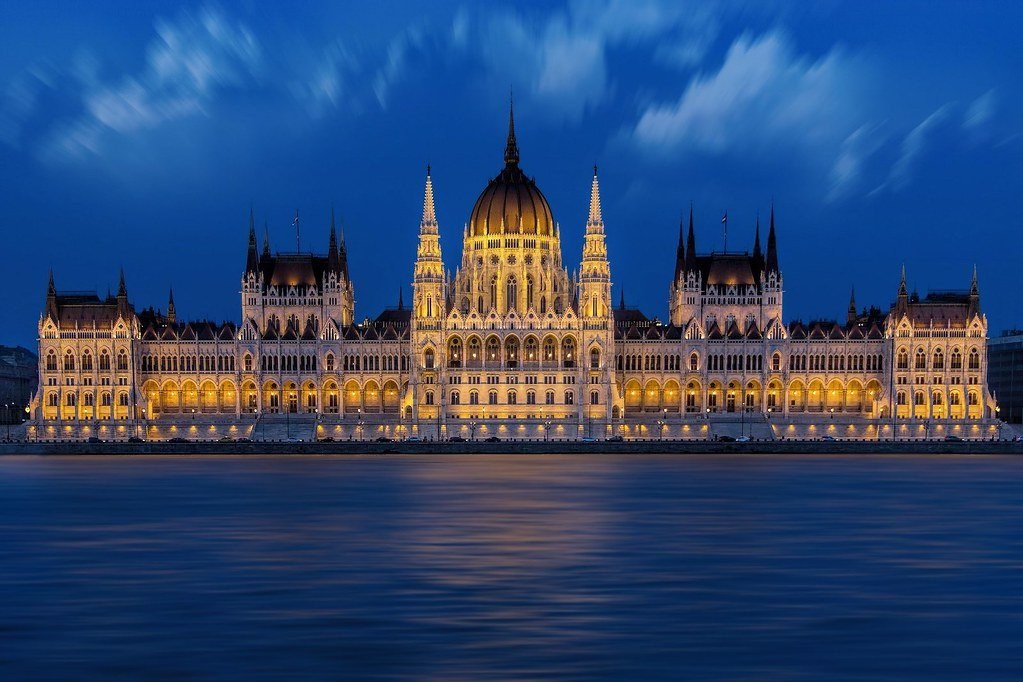
The Pearl of the Danube gives you grand boulevards and thermal baths at half of Vienna's prices, an hour up the river. Hostels cost $13–17, langos (fried dough with sour cream and cheese) is $3–4, and a set lunch menu in a local etterem runs $6–7. The famous Szechenyi Baths are the worthy splurge at $23–27 for a full day of steaming outdoors. Ruin bars pour $2–2.50 beers, and a 24-hour transit pass is about $6. Best of all, the city's signature experience — crossing the Chain Bridge at night with Parliament glowing across the water — costs nothing.
Sleep in District VII, the Jewish Quarter, where hostels, ruin bars, and late-night langos share the same six blocks — you can walk home from Szimpla Kert in five minutes. Do Szechenyi on a weekday morning, when the pools are calmer and tickets run a few dollars cheaper than weekends, and bring your own towel to dodge the rental fee. The 100E airport bus into the center costs about $6; a taxi runs four times that for the same forty minutes.
READ MORE: Hidden Gems in Europe Worth the Detour
Porto, Portugal — $50–60 a day
Western Europe's best bargain. Porto's tiled facades and riverside sunsets feel like a splurge; the bill doesn't. Hostel beds go for $18–22, an espresso is 80 cents, and a francesinha — Porto's outrageous meat-and-cheese sandwich drowned in beer sauce — costs $8–10 and feeds you for half a day. Port wine cellar tours with tastings run $15–20, and the gorgeous Livraria Lello bookshop is $10 (credited toward a book). Save with $2.50 glasses of vinho verde at any corner tasca, and ride the historic Line 1 tram along the Douro out to the ocean at Foz for about $4.
Stay in Cedofeita or near Bolhao market instead of the Ribeira waterfront — $5–8 a night cheaper and still ten minutes' walk from everything. The best free hour in town is crossing the upper deck of the Dom Luis I bridge at sunset over to the Jardim do Morro on the Gaia side, where the whole city turns gold. And note the beach math: bus 500 reaches Foz for about $2.50 whenever the historic tram's queue outweighs its charm.
Athens, Greece — $45–55 a day
Athens is far cheaper than its fame suggests. A hostel in trendy Koukaki or Psiri costs $15–18, and the city's genius budget food — gyros wrapped in warm pita — is $3–3.50 for a full meal. The Acropolis costs $22 in high season, but the $33 combo ticket covers six more ancient sites over five days, which works out to pocket change per ruin. Metro rides are $1.30, and neighborhoods like Anafiotika, a whitewashed island village hiding under the Acropolis, cost nothing at all.
Timing is the whole Athens trick: be at the Acropolis gate for the 8am opening, when the marble is cool and the cruise crowds are still two hours away, or take the late slot after 5pm in summer. The gyros benchmark is the cluster of spots around Monastiraki square, where $3.50 buys dinner with a view of the floodlit Parthenon. Budget one $10–12 taverna night in Psiri, and grab the 24-hour transit ticket at about $4.50 if you'll ride more than three times in a day.
Belgrade, Serbia — $35–45 a day
Belgrade is the cheapest capital on this list and one of Europe's most alive. Hostels run $10–14, cevapi (grilled minced-meat rolls with flatbread and onion) cost $3–4, and a flaky burek with yogurt for breakfast is $1.50–2. Kalemegdan Fortress, with its Danube views, is free to wander. Coffee culture is serious and cheap at $1.50 a cup, and the floating river clubs make it one of Europe's best nights out for under $15. Try a $2 shot of rakija, the national fruit brandy — sipped slowly, the way locals insist it should be.
Stay around Skadarlija, the cobbled bohemian quarter, or neighboring Dorcol — walkable to everything, with $1.50 espresso terraces on every corner. The floating clubs line the Sava below the fortress; entry is usually free, drinks run $3–4, and nothing starts before midnight, so nap first. For a day trip, buses to Novi Sad leave every half hour at about $6 each way, adding the Petrovaradin fortress and a second old town to your week for the price of lunch.
READ MORE: How to Eat Cheap in Europe
Sofia, Bulgaria — $35–45 a day
Bulgaria's capital sits under a mountain you can hike for free, and almost nothing in town costs real money. Hostel beds are $10–13, a warm banitsa pastry with ayran for breakfast is about $1.50, and a shopska salad with dinner adds $3. The golden-domed Alexander Nevsky Cathedral is free, trams cost 90 cents, and a full-day trip to the jaw-dropping Rila Monastery runs $25–30. Sofia is the kind of city where $45 feels genuinely extravagant.
Start with the free walking tour that meets daily outside the Palace of Justice — tip $5 and you have your bearings plus a restaurant list. Vitosha mountain is the real differentiator: city buses reach the trailheads for under $2, putting a full day's hiking above a capital at essentially zero. For Rila, the self-organized version is a morning public bus from Ovcha Kupel station at roughly $12 round trip, against $30 for the guided tour.
How to keep the big three costs down
Your budget lives or dies on beds, transport, and food. Book hostels 2–3 weeks ahead for the best rates, and consider private rooms split two ways — often just $40–50 total in these cities. Move between countries on FlixBus, where Krakow to Budapest costs $15–25 booked early, or take night buses to save a hotel night. At mealtimes, hunt the weekday lunch menus — the same food as dinner for 40 percent less — and steal the rest of the tricks from our guide to eating cheap in Europe and these 15 budget travel hacks.
Two structural saves finish the job. Pick bases that cover day trips so you move less — Krakow covers Wieliczka and Auschwitz, Sofia covers Rila and Vitosha — because every city change burns a travel day plus $20–30 in transport. And sort the money layer before flying: a no-foreign-fee card, ATM withdrawals in local currency only, and a weekly cash envelope of $40–60 so the budget stays visible. Travelers who tally spending nightly for the first three days almost always finish the trip under budget.
A sample $50 day in Krakow
Hostel bed $14, bakery breakfast and coffee $4, free walking tour (tip $5), milk bar lunch $5, tram day pass $4, Schindler's Factory museum $8, pierogi dinner with a beer $8. Total: $48 — with a castle, a museum, and two great meals behind you. That's the magic of eastern and southern Europe: $50 isn't survival mode, it's a genuinely rich day.
The same shape scales to any city on this list. Belgrade version: hostel $12, burek breakfast $2, a free fortress morning, cevapi lunch $4, river-club night with three drinks $12 — about $35 with coffee. Athens version: hostel $16, the Acropolis at $22, two gyros $7, sunset on Filopappou Hill free, wine in Psiri $6 — around $52, and that's the day with the Parthenon in it. Build each day around one paid anchor and two free ones and $50 stops being a constraint; it becomes a system.
Best time to visit for the lowest prices
These cities are cheap year-round, but shoulder season makes them absurd. May–June and September–October bring 65–75°F weather, hostel prices 20–30 percent below the July–August peak, and daylight that stretches past 8pm. Winter is the deep-discount play: Krakow and Budapest in November or February see $9–11 hostel beds and empty museums, and the thermal baths are actually better in the cold. The one winter exception worth paying for is December, when prices tick back up around the Christmas markets — worth every cent, but book three or four weeks out. Whatever you do, avoid pricing your trip in early August, when half of Europe is on vacation at once and even Belgrade's hostels creep toward $20.
Common mistakes that blow the budget
The travelers who overspend in cheap Europe almost always make the same five errors:
- Flying between cities. Budget flights look like $30 until bags and airport transfers double them. The bus is $15–25, leaves from the center, and often wins on total time.
- Eating dinner on the main square. Anywhere within sight of a famous landmark charges 50–100 percent more. Walk three blocks; in Krakow that turns a $15 dinner into a $7 one.
- Exchanging cash at street kiosks. The "0% commission" signs hide terrible rates — some Budapest kiosks skim 15 percent. Stick to bank ATMs and cards.
- Buying attraction tickets at the door without checking online first. Student, youth, and combination discounts routinely knock 20–50 percent off — an ISIC card or a passport showing you're under 26 is worth real money across the whole continent.
- Under-planning Sundays. In Poland and much of the Balkans, many shops close; the traveler who didn't buy breakfast supplies on Saturday pays hotel-café prices instead.
Getting there and between cities cheaply
Getting into the region cheaply is half the game. Fly into a major hub — Krakow, Budapest, and Athens all take direct budget routes from across Europe for $20–60 on Ryanair and Wizz Air — then fill in with ground transport. FlixBus connects every city in this article: Krakow–Budapest $15–25, Budapest–Belgrade $20–30, Belgrade–Sofia $18–25, booked a week ahead. Night buses on the longer legs save a hostel night on top. Trains are worth it in two places: any Polish intercity route, where advance fares barely beat the bus but the comfort gap is huge, and the scenic run down to the coast if you extend to Croatia. Skip continental rail passes for this region entirely — point-to-point tickets are so cheap the pass never breaks even. For scoring the flight in, our cheap flights guide covers the fare-alert routine that finds those $30 legs.
Frequently asked questions
Is $50 a day realistic in Western Europe too?
It's tight but doable in Porto, and possible in a handful of others — Lisbon, Seville, Naples — with hostel dorms and self-catering. Paris, Amsterdam, and anywhere Swiss need $80–100 a day even traveling carefully. The smarter play is to weight your itinerary east: two-thirds of your nights in the $35–50 cities buys you a splurge weekend in the expensive ones.
Card or cash in Eastern Europe?
Card, overwhelmingly — even Belgrade's market stalls increasingly take contactless. Carry $20–30 in local currency per country for tips, small bakeries, and public toilets, which often charge 50 cents. And remember the golden ATM rule from the tip box above: always pay in local currency, never accept the machine's conversion.
How far ahead should I book hostels?
Outside July, August, and December, 3–7 days ahead is plenty, and it keeps your route flexible. Peak season and festival weekends — Sziget in Budapest in August, Krakow's Wianki in June — need 3–4 weeks. Booking only your first night and deciding the rest on the ground is the classic move, and it works beautifully in this region.
Is Eastern Europe safe for solo travelers?
All six cities in this guide are safer than most large Western European and American cities by street-crime statistics. The realistic risks are pickpocketing on crowded trams and taxi overcharging at stations — use Bolt or Uber and you've eliminated the second one entirely.