Thailand is where budget travel clicks for most people. The food is legendary and costs pocket change, the transport network is smooth and cheap, and a beach bungalow still costs less than a parking spot in most Western cities. This guide breaks down exactly what you'll spend — on beds, bowls of noodles, buses, trains, and ferries — and ends with a realistic $30-a-day budget that works everywhere except the priciest islands. All prices are in US dollars, pulled from real backpacker routes, and they hold whether you're staying two weeks or two months.
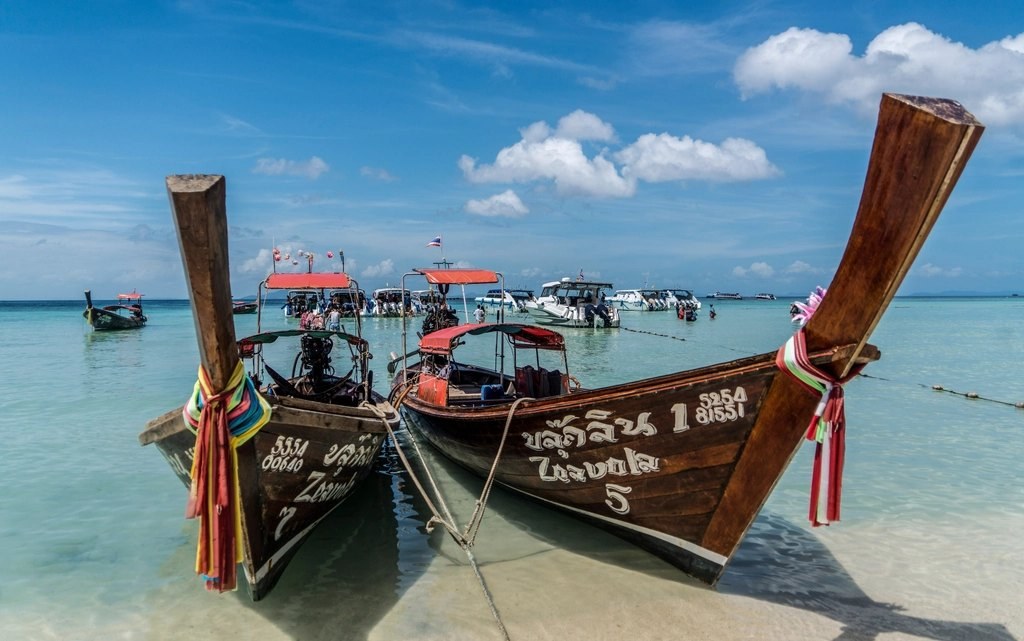
What Thailand costs per day
Thailand runs on three price tiers. Bangkok and Chiang Mai are the cheapest comfortable cities in the country: $20–28 a day covers a hostel bed, three street-food meals, transit, and a temple or two. The northern towns of Pai and Chiang Rai cost about the same. The islands are the splurge — Koh Phangan and Koh Lanta run $30–40 a day, while Phuket and Koh Samui can push past $45 once beach clubs and taxis creep in. Mix a week in the north with a week on a cheaper island and you'll average almost exactly $30. Add roughly $5 a day in high season (December–February), when the best-value rooms sell out first and ferries fill up days ahead.
Two worked examples make the tiers concrete. A Chiang Mai day: $8 dorm, $6 of market meals, $3 in songthaews, $6 of temple-and-museum money — about $23. A Koh Phangan day: $18 bungalow, $9 of food once a smoothie bowl sneaks in, $7 scooter, $5 of beach-bar drinks — about $39. The gap is structural, not carelessness, which is why route design beats daily discipline: every week you tilt from island to city saves roughly $70 without giving up a thing.
Street food: the best $5 food day on Earth
A plate of pad thai from a street cart is $1.20–1.50. A bowl of boat noodles in Bangkok is $0.60–1. Grilled chicken with sticky rice runs $1.50–2, mango sticky rice is $1.50–2.50, and a fresh fruit shake is about $1. Eat every meal from markets and carts and you'll spend $5–8 a day while eating better than tourists paying five times that. Night markets — Chiang Mai's Sunday Walking Street, Bangkok's Chinatown — are the sweet spot; for ordering tactics and more dishes, see our guide to cheap street food in Asia. Western food is the budget killer here: one $7 burger buys five Thai meals.
First-night targets: in Bangkok, walk Yaowarat Road from the Chinatown gate and graze — kuay jab pepper-pork soup for $1.50, satay at 40 cents a stick. In Chiang Mai, the stalls outside Chang Phueak Gate serve the famous braised pork leg on rice, khao kha moo, for about $1.50. Order the local way: point, hold up fingers for quantity, and say "mai phet" if you fear chili. A 30-cent bag of sticky rice turns any skewer stop into a full dinner.
READ MORE: The Perfect Thailand Itinerary
Sleeping cheap: hostels vs bungalows
City hostels are outstanding value: $6–10 buys a dorm bed with air conditioning in Bangkok or Chiang Mai, often with a rooftop pool at the $10 mark. Private fan rooms in guesthouses run $12–18. On the islands, the classic move is a beach bungalow — $15–25 gets a fan hut steps from the water on Koh Lanta or Koh Phangan, and air-con versions run $25–35. Book only your first night online, then walk around and negotiate for stays of three nights or more; a 20–30% discount for a week is completely normal in low season.
Location beats star count in every Thai town. In Bangkok, sleep near a BTS or MRT stop — an $8–9 dorm in Ari or Phra Khanong beats a Khao San Road bed at the same price on sleep alone. In Chiang Mai, anywhere inside or just east of the old-city moat puts the night markets on foot. On islands, remember the bungalow spread: the $18 that buys a garden hut on the busy strip buys a sea-view porch one cove over — and ask for a room away from the generator.
Getting around: buses, trains, and ferries
Overnight VIP buses connect Bangkok to Chiang Mai for $18–25 — grab a lower-deck seat for a smoother ride. The sleeper train on the same route is the better experience: $25–30 for a second-class berth with crisp sheets and a morning coffee vendor. Heading south, a combined bus-and-ferry ticket from Bangkok to Koh Phangan runs $30–35. Short hops cost almost nothing: island ferries are $8–15, Bangkok's Skytrain is $0.50–1.70 a ride, a songthaew shared truck in Chiang Mai is about $0.90, and a Grab motorbike across town is $1–2.
Booking specifics: sleeper berths to Chiang Mai sell out days ahead in high season, so book early through the State Railway's online system and pay the extra dollar for a lower bunk — wider, steadier, and with its own window. For the Gulf islands, the Lomprayah bus-and-catamaran combo is the fast standard at $30–35 through to Koh Phangan or Koh Tao. In Bangkok, a stored-value Rabbit card smooths the Skytrain, and the orange-flag river ferry doubles as 50-cent sightseeing.
Bangkok vs the islands: where your money goes
In Bangkok your money buys experiences: the Grand Palace ($15), the orange-flag ferry down the Chao Phraya ($0.50), and endless nearly-free food. On the islands, costs shift to logistics — ferries, scooter rentals at $6–8 a day, and $3–4 happy-hour cocktails at sunset bars. Budget an extra $10 a day for island time, and pick one island group instead of hopping between coasts; every crossing burns $30 and half a day. If you're planning the full loop, our Thailand itinerary maps a two-week route that keeps transfers cheap.
If the budget forces a choice of coasts, the Gulf side wins on cost: Koh Phangan outside Full Moon week and Koh Tao hold $15–20 bungalows nearly year-round, while Andaman beauty spots like Railay and Koh Phi Phi price their fame at $30-plus for the same hut. Full Moon week itself doubles Haad Rin prices and imposes minimum stays — sleep in Thong Sala or Srithanu instead and split a $10 taxi across the island. Either coast, a $2 7-Eleven breakfast claws back the beach-zone markup daily.
READ MORE: Backpacking Southeast Asia: The 1-Month Budget Plan
A sample $30-a-day budget
Here's a real day in Chiang Mai: dorm bed $8, khao soi breakfast $1.50, temple entry $3, market lunch $2, scooter rental split with a friend $3.50, dinner at the night bazaar $3, two Chang beers $3, and $3 for laundry and a fruit shake — $27 total, with change left for a second mango sticky rice. The island version: bungalow $18, three meals $8, snorkel rental $4 — $30 on the nose. A month at this pace costs about $900 before flights, and couples travel even cheaper per person — a shared private room splits to less than two dorm beds almost everywhere outside Bangkok.
Stretch the same numbers with three quiet moves: make the $1.50 khao soi your big meal at lunch and eat lighter at dinner; rent the scooter for two chosen days instead of all seven; and do temples in clusters on foot — Chiang Mai's old city packs dozens inside the moat, nearly all free or $1–3. On islands, book snorkel trips from the beach-road agents the afternoon before departure, when unsold boat seats drop from $25 to $15.
Where budgets die in Thailand
Three things quietly wreck Thai budgets: taxis that refuse the meter (insist, or just use Grab), tours booked from hotel lobbies at double the walk-in price, and alcohol — beers are only $2–3, but cocktail buckets add up frighteningly fast. Full-day tours are worth it when shared: $25–35 covers Doi Inthanon or an island-hopping boat with lunch. Keep those three in check and Thailand stays the easiest place on the planet to travel well on very little. And when you're ready to extend the trip overland, our one-month Southeast Asia plan shows how Thailand fits into an $800 month across four countries.
The fixes cost nothing: screenshot the Grab fare before accepting any driver's "special price"; compare two walk-in agencies against your hostel's tour board, where the spread on the same Doi Inthanon van is routinely $10; and set the bar budget as a number of drinks, not a feeling — at $2.50 a Chang, three beers is a $7.50 night, while one bucket-fueled blur is $30 and a lost morning. Guard those three lines and the $30 day survives even the islands.
Best time to visit on a budget
Thailand's price calendar has three gears. High season, December through February, is glorious — dry, 85°F, and busy — and rooms run $5–10 above the rest of the year. The shoulder months of November and March are the sweet spot: high-season weather at green-season prices. The green season, May through October, is the pure budget play — rain arrives in loud one-hour bursts, mostly in the afternoon, and bungalows on Koh Lanta drop from $22 to $12 with the beach nearly to yourself. Two timing tricks matter. First, the islands split by coast: when the Andaman side (Phuket, Krabi, Lanta) is wet from May to October, the Gulf side (Koh Phangan, Koh Tao, Samui) stays mostly dry until its own rains in October–December — pick your coast by month and you can find sunshine almost year-round. Second, skip the north in March and early April, when crop-burning smoke blankets Chiang Mai and Pai; that's exactly the moment to be on a beach instead.
Classic scams to sidestep
Thai scams are old, well-documented, and easy to dodge once you can name them:
- The "Grand Palace is closed" tuk-tuk. A friendly stranger insists the sight is shut and offers a tour that ends at a gem shop. The palace is open; walk on.
- The gem deal. You cannot buy sapphires at a tenth of their value and resell them at home. This one still catches smart people every single week.
- Jet ski and scooter damage claims. Operators bill hundreds for scratches you didn't cause. Video the vehicle before renting, use shops your hostel vouches for, and never leave your passport as a deposit — cash or a photocopy is standard.
- The airport taxi hustle. Ignore touts inside the terminal; the official metered rank or a Grab from the departures level saves 50–70 percent.
- Bar bill padding on the tourist strips. Check the tab line by line and pay cash — or better, drink where the menu has printed prices.
What to pack for Thailand
Less than you think — Thailand sells everything, cheaply. The essentials worth carrying in:
- Temple wear: light trousers or a long skirt plus something covering the shoulders. Big temples rent cover-ups for $1–2, but you'll want your own by week two.
- Real mosquito repellent with DEET or picaridin — dengue exists year-round. A local bottle of Sketolene is $3 at any 7-Eleven if you run out.
- Reef-safe sunscreen from home; a small imported tube costs $12–15 in island shops.
- Sandals you can live in — $28 sport sandals or the $3 Thai market version, your call.
- A dry bag ($5–8 in any beach town) for boat trips, waterfalls, and Songkran's citywide water fights every April.
Everything else — clothes, toiletries, even a spare backpack — costs less at a Thai market than at home; our carry-on packing list covers the full method.
Frequently asked questions
Do I need a visa?
Most Western passports currently get 60 days visa-free on arrival, extendable once by 30 days for about $55 at any immigration office — meaning three months in Thailand costs $55 in paperwork, total. Rules shift, so check your own passport's terms before flying.
What does a SIM card cost?
Tourist SIMs from AIS or TrueMove run $10–15 at the airport for 15–30 days of generous data, and a few dollars less at any 7-Eleven in town. An eSIM bought online before you land costs about the same and works the moment you clear immigration.
Should I tip?
Thailand has no real tipping culture at street stalls or local restaurants — leaving small change is appreciated, expected nowhere. Round up for drivers, leave 20–50 baht for housekeeping if you like, and tip $3–5 for a great full-day tour guide. Nobody will chase you down either way.
Is the tap water drinkable?
No — but you never need to buy bottles. Refill machines on Thai streets dispense a liter for 5–10 cents, and most hostels and guesthouses offer free filtered water. A refillable bottle saves $30–40 a month and a small mountain of plastic.