Accommodation is the biggest line in almost every travel budget — which means it's also the biggest opportunity. Cut what you spend on sleeping and you can travel twice as long on the same money, or twice as well. This guide walks the whole ladder, from $5 hostel dorms to stays that cost literally nothing, with real prices and the tactics that make each option work. Master two or three of these and you can put a roof over your head anywhere on Earth for a fraction of the going rate.
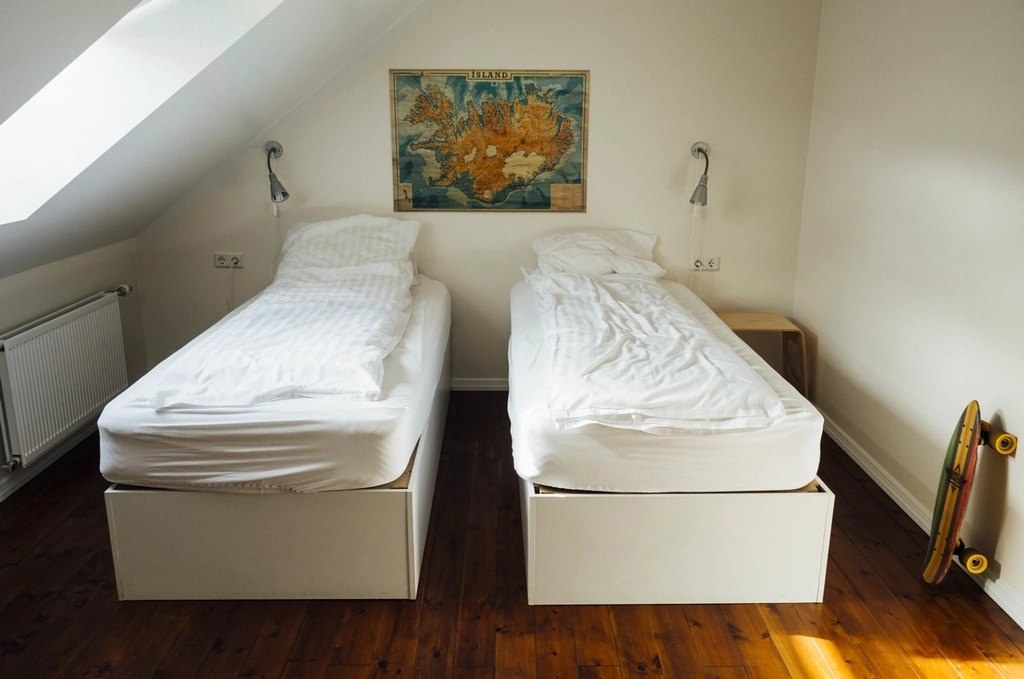
Hostels: still the backbone of budget travel
The numbers: $5–8 a night in Southeast Asia, $10–16 in Eastern Europe and Latin America, $25–40 in Western Europe, and $35–50 in pricey outliers like Switzerland or Iceland. The trick is choosing well — filter for an 8.5+ rating and read the three most recent reviews, not the score. Modern hostels come with privacy-curtained pods, reading lights, and free breakfasts that quietly save $5–8 a day. Traveling as a pair? Compare a private hostel room against two dorm beds; it's often only $5 more for an actual door. Outside July and August, booking just a day or two ahead is usually fine everywhere but the biggest capitals.
Real-world benchmarks help you spot a fair price at a glance: Bangkok and Hanoi dorms at $6–8, Krakow and Budapest at $12–15, Lisbon at $22–28, Paris and Amsterdam at $35–45. Hostelworld shows the widest selection, but the same bed is often $1–3 cheaper on Booking.com once loyalty discounts kick in, so check both. Weigh freebies like line items too: breakfast is worth $5, laundry $4, and the free dinner nights common in Portugal and Spain can make an $18 hostel cheaper than a $14 one.
Guesthouses and family-run hotels: the sweet spot
Across Asia and Latin America, guesthouses beat hostels on value the moment two people travel together. In Vietnam, $10–15 buys a private room with air conditioning and breakfast — the backbone of the budget in our Vietnam on a budget guide — while Guatemala and Bolivia offer the same for $15–25. The unwritten rule everywhere: rates online are opening offers. Staying three nights or more? Ask for a discount in person; 10–20 percent off is routine, and low-season walk-ins do even better.
The finding method matters as much as the price: booking apps list maybe half the guesthouses in any Asian town, so book one night, then walk the strip and read the door rates. Thai islands are the classic case — a $22 online bungalow often has an unlisted $15 twin next door. Ask to see two rooms before choosing (corner rooms are brighter, rear rooms quieter), confirm the wifi works in the room rather than the lobby, and pay cash for multi-night stays; that is what unlocks the discount.
READ MORE: 15 Budget Travel Hacks That Save Real Money
Couchsurfing: free beds and real locals
Couchsurfing costs about $2.50 a month for membership, and the beds are free — but that's not really the point. You stay with a local who shows you the noodle shop no blog has found and the viewpoint with no crowd. To actually get hosted: complete your profile, get a few friend references, and send personal requests that mention something specific from the host's profile. Copy-paste requests get ignored. It's best for one- to three-night city stops, and solo travelers should read our solo safety guide and vet reviews carefully.
A request that works takes five minutes: two sentences about you, two about why this host specifically, and your exact dates — sent to five or six hosts per city about a week out. Then let etiquette pay the rent: bring a small gift from home or cook one dinner ($10 of groceries against a $30 bed is still travel's best trade), keep your host's schedule, and write a reference promptly. Save the app for capitals and university cities; resort towns and small islands are where it quietly fails.
House-sitting: free homes with a furry catch
House-sitting is the luxury tier of free accommodation: entire homes — with kitchens, washing machines, and usually a dog or cat who needs you — in exchange for looking after the place. TrustedHousesitters charges $129–259 a year, and a single week-long sit repays that many times over; sits in Europe, Australia, and North America routinely run one to four weeks. Start by building reviews with a couple of local or short sits, apply fast when listings appear, and be honest about your travel dates. Retired couples and remote workers absolutely dominate this game — join them.
Know the application math: desirable sits in London, Paris, or Sydney draw dozens of applicants within a day, so switch on instant alerts and apply inside the first hours with a short note and a video introduction — profiles with video win disproportionately. Nomador and HouseSitMatch are smaller alternatives with lighter competition. And budget honestly for the animal: a dog sit means being home morning and evening for walks, which suits slow travelers and remote workers far better than three-day sightseers.
Work exchanges: Worldpackers and Workaway
Trade a few hours of help for free lodging — often with meals thrown in. Worldpackers and Workaway both charge about $50 a year for membership and list tens of thousands of hosts: hostel receptions in Lisbon, farms in New Zealand, surf camps in Costa Rica, eco-lodges in Peru. The standard deal is four to five hours a day, five days a week, for a bed and one or two meals — cutting your daily costs to almost zero while you actually live somewhere instead of passing through. Read past volunteer reviews closely and agree on hours in writing before you arrive.
Placement quality tracks the application: hosts with fifty reviews get flooded, so write to newer hosts with a handful of good ones and name concrete skills — bar experience, social media, a driver's license — to lift your acceptance rate. Gigs worth targeting: hostel evening reception (a free private room is common), guesthouse breakfast shifts on Portugal's Algarve, and dive-shop desks on Koh Tao that sometimes add discounted certifications. Plan stints of two to four weeks; shorter annoys hosts, and open-ended can drift into unpaid work you never agreed to.
READ MORE: How to Travel on $30 a Day
The overnight transport trick
Every night you sleep in motion is a night you don't pay for a bed. Vietnam's sleeper buses cost $8–15 and roll you down the coast while you dream. India's AC sleeper trains cross half the country for $10–15. In Europe, night buses run $20–40 between major cities, and night trains like Budapest to Bucharest cost $40–60 in a couchette — cheaper than a hostel bed plus a daytime ticket bought separately. The double win: you save a night's rent and wake up in a new city with a full day ahead of you. One insider note: always claim a lower bunk when you can — flatter, cooler, and far easier with luggage.
Book the good routes a day or two out — through 12Go in Asia, or directly with FlixBus and RegioJet in Europe, where the $20 night fares sell first and walk-up prices double. And pack a sleep kit that lives in your daypack: earplugs, an eye mask, a warm layer against the air conditioning, and valuables in a small bag that sleeps under your head, never in the hold.
Booking tactics that cut the price
Wherever you end up sleeping, book smarter. Compare Booking.com, Hostelworld, and Agoda — the same room varies by 10–25 percent between them — then check the property's own website or message them directly; many will beat the platform price since they save the commission. Loyalty levels like Booking's Genius quietly knock 10–15 percent off. Monthly stays on Airbnb are routinely discounted 30–50 percent, which is how slow travelers rent whole apartments in Mexico or Portugal for $500–700 a month. And in most of Asia, simply walking in and asking beats every website. Stack these with our 15 budget travel hacks and accommodation stops being your biggest expense at all.
One more lever: timing the booking itself. Hostel prices drift upward from about three weeks out in high season, but hotel and private-room rates often dip 24–48 hours before the night as properties dump unsold inventory — that's the window for spontaneous upgrades. And for stays of five nights or more, message the property directly with your dates and ask their best price; a two-line email routinely saves 10–15 percent.
Red flags: how to spot a bad cheap stay before you book
Cheap and bad are not the same thing, and the listing usually tells you which one you're getting. Walk away when you see: no reviews within the last three months (management may have changed); the phrase "lively atmosphere" doing the work "clean" should be doing (it's a party hostel — fine only if that's the plan); photos that show every angle of the rooftop bar and none of the bathrooms; and a location pin that sits vaguely on a highway. On the review page, ignore the score and read the complaints — a 7.9 where every gripe is "stairs" and "thin walls" is a better bet than an 8.6 with two recent bedbug mentions. And one hard rule that costs nothing: any bedbug report from the last six months is disqualifying, at any price. A $9 bed that ruins the contents of your backpack is the most expensive bed you will ever book.
Common mistakes that make cheap beds expensive
- Booking a far-flung neighborhood to save $4 a night, then spending $8 a day on transit getting back to everything. Price the location, not just the bed.
- Paying for amenities you won't use — a $6 premium for a "free breakfast" that's toast, or a pool you'll see once. The base bed plus a $2 bakery run usually wins.
- Ignoring city taxes and fees until checkout. European city taxes of $1–4 a night and booking-app "service fees" can quietly add 15 percent to a week; compare final totals, not headline rates.
- Booking seven nights upfront somewhere you've never seen. Book two, then extend at the desk if you like it — extensions are routinely cheaper than the app anyway.
- Arriving at night with nothing booked. That's how tired travelers pay double at the first place with a lit sign. Even committed walk-in negotiators should book night one.
Sample budget: a month of beds on three routes
Here's what 30 nights realistically costs when you mix the tiers from this guide:
- Southeast Asia: 12 dorm nights at $6, 12 guesthouse nights at $13, 4 nights on sleeper buses, and 2 homestay nights at $9 — about $246 for the month, or $8.20 a night.
- Eastern Europe: 16 hostel nights at $13, 8 private-room nights split with a travel partner at $22 your share, a 5-night work exchange, and 1 night bus — about $384, or $12.80 a night.
- Western Europe: 14 hostel nights at $30, a 7-night house-sit, 6 nights in a monthly-discounted private room at $28, and 3 nights Couchsurfing — about $588, or $19.60 a night in the world's priciest region.
Those numbers assume no luck at all — no free upgrades, no low-season windfalls. The mixing is the method: any single tier costs more than the blend. And where you point the route matters just as much; the same month of beds in the cheapest countries to visit runs a third of the Western Europe figure.
Frequently asked questions
Are cheap hostels safe for my stuff?
Overwhelmingly yes, with two habits: use the locker (bring your own padlock — buying one at the desk is a $5 tax), and keep passport, cards, and phone in a small pouch that sleeps in your pillowcase. Hostel theft is rare and mostly opportunistic; a locked locker removes the opportunity.
When is booking ahead actually necessary?
Four cases: your arrival night anywhere, festivals and holidays (Tet, Songkran, Oktoberfest, New Year's everywhere), July–August in Europe, and small islands with limited beds. Outside those, rolling up with nothing booked past tomorrow is not just viable — it's often the cheapest way to travel, because your eyes beat any listing photo.
Is Couchsurfing still active?
Smaller than its mid-2010s peak but very much alive in big cities, and the hosts who remain are the committed ones. Response rates are best midweek and worst on holiday weekends. BeWelcome is a free, growing alternative that runs on the same etiquette.
What about camping?
In New Zealand, Scandinavia, and Scotland, wild camping or $10–15 campsites beat every option in this guide if you're carrying gear anyway. Elsewhere the math gets thin — a tent only beats a $6 Asian guesthouse if the hike itself is the point.