Watching green ribbons of light unfurl across a black Arctic sky is the kind of moment that rearranges you a little. But the aurora is shy — seeing it takes dark skies, clear weather, and being in the right latitude band between roughly September and March. These ten places give you the best odds on Earth, from budget-friendly bases to once-in-a-lifetime splurges.
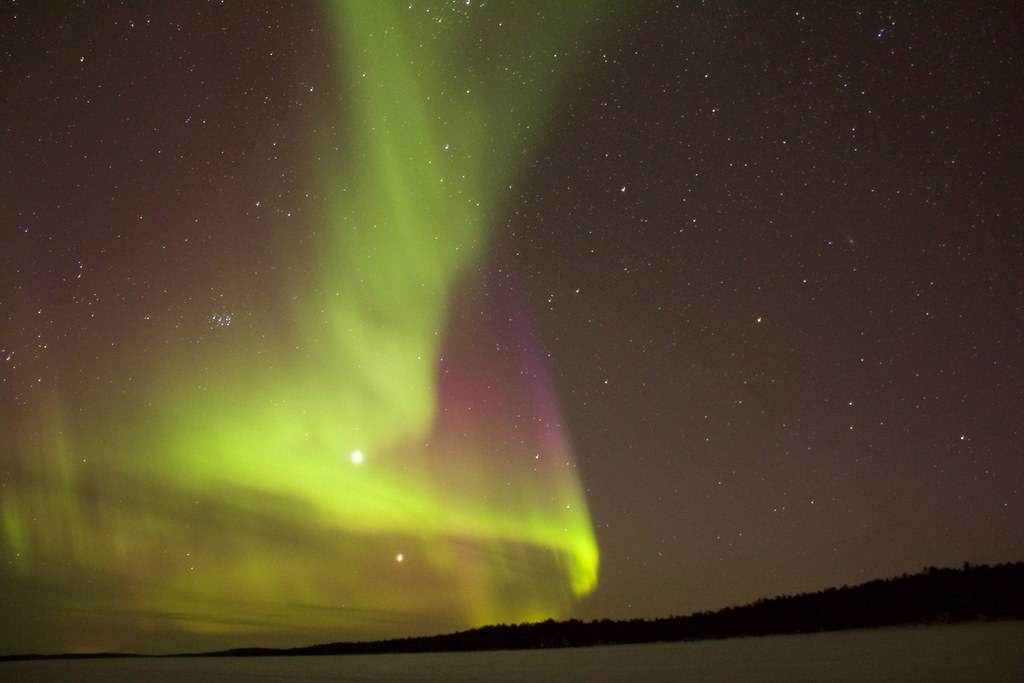
1. Tromsø, Norway
The unofficial aurora capital. Tromsø sits right under the auroral oval, has a real city's restaurants and museums for cloudy nights, and its "aurora chase" minibus tours ($120–160) drive to whichever fjord has clear sky. Late September and March bring milder cold and statistically stronger displays.
Base yourself near the Storgata pedestrian street and you can walk to everything that matters. Smart Hotel Tromsø runs $85–100 a night in aurora season — cheap for Norway — and Raketten, a tiny kiosk operating since 1911, sells the city's best hot dog for about $8 when restaurant mains push $30. Skip the tour one night and ride the Fjellheisen cable car ($28 return) up Storsteinen at dusk, then stay for the dark.
2. Abisko, Sweden
A tiny village in Swedish Lapland with a famous secret: the surrounding mountains create a "blue hole" of clear sky even when the region is clouded over. Scientists say Abisko has some of the highest sighting odds anywhere. The Aurora Sky Station chairlift experience costs about $95.
Getting there is half the fun: the night train from Stockholm ($70–120 in a couchette) rolls into Abisko Turiststation's own platform about 17 hours later, so you never need a rental car. Beds at the STF mountain station start around $45 in a shared room, and the shore of Lake Torneträsk — five minutes' walk out — is dark enough that paid tours are optional. Book December–March weekends two to three months ahead.
READ MORE: The Perfect Iceland Ring Road Itinerary
3. Rovaniemi & Finnish Lapland
Finland's aurora zone is all about the glass igloo — fall asleep watching the sky from a heated bed. Glass cabins run $250–500 a night, but you can hunt for free from any dark lakeshore. Rovaniemi doubles as the official home of Santa Claus, which kids (and most adults) love.
You don't need the $400 igloo to do Rovaniemi well. Hostel Café Koti in the town centre runs $50–70 a night, and Santa Claus Village is free to enter — standing on the painted Arctic Circle line costs nothing, the official crossing certificate about $5. For hunting, walk 30 minutes to the Ounasvaara ski hill or the riverbank behind the Arktikum museum; both go properly dark on a KP3 night.
4. Iceland
The only place on this list with budget flights from both Europe and the US. Rent a car, escape Reykjavik's light pollution, and park facing north — Þingvellir National Park and the Snæfellsnes peninsula are favorites. September and October offer aurora plus non-icy roads; it pairs perfectly with our Iceland Ring Road itinerary.
If you'd rather not drive far, Grótta lighthouse on the Seltjarnarnes peninsula is a 10-minute taxi from downtown Reykjavik and dark enough for strong displays. Winter rentals drop to $40–55 a day — take the gravel insurance — but fuel runs about $8.50 a gallon, so plan one long night drive rather than five short ones. Splurge option: Hotel Rangá near Hella phones your room when the lights appear, from about $330 a night.
5. Fairbanks, Alaska
Sitting directly under the auroral oval, Fairbanks claims that if you stay three nights in winter and go out each night, your odds of a sighting top 80%. Chena Hot Springs, an hour away, lets you watch the sky from 106°F water. Aurora season runs late August to late April.
Murphy Dome and Cleary Summit, both under 45 minutes from town, are the free local lookouts — no tour needed if you rent a car at Fairbanks airport for $55–70 a day. Entry to Chena Hot Springs costs about $20, and the university's Geophysical Institute posts a nightly forecast locals trust over any app. Cap the night with pie at The Cookie Jar diner for around $6.
READ MORE: Bucket List Experiences Worth Every Penny
6. Yellowknife, Canada
The Northwest Territories' capital markets itself as North America's aurora hub, and the stats back it up: flat horizons, dry clear winters, and displays 240 nights a year. Heated teepee "aurora village" experiences run about $100 a night. Dress for -20°F and it becomes pure magic.
In town, spend one evening on fish and chips at Bullocks' Bistro — about $35, scribbled-on walls, worth it — then hunt free the rest of the week: the Dettah ice road and the Frame Lake trail both escape the streetlights within 15 minutes. Return flights from Vancouver or Calgary run $250–400 on Air Canada or WestJet. Come late August to mid-September if you want aurora without the -20°F part.
7. Ilulissat, Greenland
Aurora over a fjord full of icebergs the size of buildings — Greenland is the most dramatic backdrop on this list. Ilulissat's ice fjord is a UNESCO site, and September trips combine northern lights with whale watching before deep winter sets in. Fly in from Copenhagen or Reykjavik.
Flights are the budget-killer — $700–1,000 return from Copenhagen on Air Greenland — so keep the ground game cheap. The Sermermiut boardwalk to the ice-fjord viewpoint is free and reaches full darkness 20 minutes from town, and Hotel Hvide Falk runs roughly half the price of the famous Hotel Icefiord. Aim for mid-September: aurora season has begun and boats still sail to the calving front for about $90.
8. Lofoten Islands, Norway
The photographer's choice: jagged peaks, red cabins, and Arctic surf beaches that reflect the lights back at the sky. Lofoten sits slightly below the strongest aurora band, but when the forecast hits KP3+, the foregrounds here are unbeatable. Rent a cabin (rorbu) from about $130 a night.
Fly to Bodø, then take the three-hour ferry to Moskenes — about $50 with a small car, and the crossing itself is a photo op. Skagsanden and Haukland are the two classic aurora beaches, both free to park at. Base in Reine or Hamnøy, self-cater from the Coop in Leknes (restaurant mains run $30-plus), and more cabin-hunting tricks live in our cheap accommodation guide.
9. Svalbard, Norway
The world's northernmost settlement is the only place where you can see the aurora during the day — from mid-November to January the sun never rises, so the sky stays dark 24/7. Add dog sledding and glacier caves and it's a true expedition, one for the bucket list.
Logistics are easier than the latitude suggests: SAS and Norwegian fly to Longyearbyen from Oslo and Tromsø for $150–300 return, and no visa is required. Coal Miners' Cabins in Nybyen runs about $95 a night against $250-plus in the centre. One hard rule — you can't leave town limits without an armed guide because of polar bears, so budget $150–200 for a snowmobile or dog-sled aurora trip and treat it as the main event.
10. The Scottish Highlands
No Arctic flight required. During strong solar activity, the "Mirrie Dancers" appear over Caithness, the Isle of Skye, and Shetland. Sightings are less reliable, but a Highlands road trip is spectacular anyway — the aurora becomes a free bonus. Follow AuroraWatch UK alerts and keep whisky handy.
The Tomintoul and Glenlivet Dark Sky Park in the Cairngorms is the smart base — genuinely dark skies, with distilleries on hand for cloudy nights. AuroraWatch UK's free email alerts are the trigger: only head out on amber or red status. B&Bs in Tomintoul run $80–110 a night, a fraction of Arctic prices, and if the lights no-show you're still in whisky country with zero regrets.
When should you book?
Peak season is December–February, but locals swear by the equinox months — late September and March — when geomagnetic activity spikes and temperatures are kinder. Book accommodation 4–6 months ahead for Tromsø and Abisko, and pack smarter than you think you need to: our ultimate packing list covers the layering system that keeps you outside long enough to catch the show.
Flights follow a different rhythm than beds: Tromsø and Rovaniemi fares are cheapest 8–10 weeks out, then climb sharply inside three weeks of the Christmas break. If your dates are flexible, target the last week of November — full aurora darkness, pre-holiday prices, and hotels still 20–30% below February rates. Set a fare alert now; our budget travel hacks cover the tools that do the watching for you.
How the aurora forecast actually works
The KP index everyone quotes runs from 0 to 9 and measures geomagnetic activity — but here's what the apps don't explain. If you're inside the auroral oval (Tromsø, Abisko, Fairbanks, Yellowknife), a modest KP2 is enough for a good show directly overhead. You only need the KP5+ headlines when you're watching from lower latitudes like Scotland. Solar activity also repeats on a roughly 27-day cycle as the sun rotates, so if there was a strong display three days before your trip last month, your dates may inherit it. And the thing that actually decides your night is clouds: a KP7 storm above solid overcast shows you nothing, while KP2 under clear sky can be magic. Check the cloud forecast first, KP second — locals use local weather radar plus a free app like My Aurora Forecast, then drive to the clear patch.
Sample budget: four nights in Tromsø
Norway prices scare people off, but a well-planned aurora trip is more doable than the glass-igloo marketing suggests. Realistic per-person numbers for four nights:
- Flights: $120–250 return from most European hubs on Norwegian or SAS — book 2–3 months out, and see our cheap flights guide for timing tricks.
- Accommodation: $360 — shared Airbnb or a decent guesthouse at $90 a night, split two ways.
- One guided chase tour: $140 — worth it on your first night to learn the spots.
- Rental car for two days: $75 each — then self-chase using what you learned.
- Food: $160 — supermarket breakfasts and lunches ($10–12 a day), two restaurant dinners ($35 each).
- Total: roughly $850–1,000 — about half of what a packaged "aurora break" charges for the same nights.
Common mistakes aurora chasers make
- Booking only one or two nights. The single biggest cause of failed trips. Three nights gives you roughly double the odds of one clear sky; four is the sweet spot.
- Staying under city lights. Even in Tromsø you need to get 20 minutes out — Ersfjordbotn and Kvaløya are the classic escapes. Streetlight glow washes out all but the strongest displays.
- Watching the KP number instead of the sky. Displays surge in 15–30 minute substorms. If the sky looks like faint grey cloud that moves strangely, point your phone camera at it — that grey is often green.
- Ignoring the moon. A full moon brightens the sky considerably. New-moon weeks give you darker skies and better color, both to the eye and the camera.
- Giving up at 11pm. Statistically the most active window is 10pm–2am local time. Nap in the afternoon; the aurora keeps night-owl hours.
Frequently asked questions
Will it look like the photos?
Sometimes. Cameras collect light for seconds at a time, so they saturate the greens and pull out purples your eyes can't. A moderate display looks like shifting pale-green ribbons to the naked eye — still breathtaking — while a strong storm genuinely fills the sky with moving color. Manage expectations and the real thing will still floor you.
Can I see the aurora with kids in tow?
Yes — Rovaniemi is the family pick, since Santa's village fills the daytime and many glass cabins let kids watch from bed. Yellowknife's heated Aurora Village teepees also work well for short attention spans at about $100 a night.
Is there a southern hemisphere version?
The aurora australis dances over Tasmania and New Zealand's South Island, but there's far less accessible land under the southern oval, so sightings are rarer. If the lights are the goal, fly north.
Can I see the lights from a ship?
Yes — Norway's Hurtigruten coastal ferry sails the entire aurora zone from Bergen to Kirkenes, and winter voyages come with a genuine perk: if the lights don't appear on a 12-day round trip, they give you another cruise free. Shorter 6-night legs start around $800 with meals. The ship wakes you over the tannoy when the sky lights up, which beats standing in a frozen parking lot refreshing an app.
Can anyone guarantee a sighting?
No, and be wary of anyone who implies it. What you can buy is better odds: multiple nights, mobile chase tours that drive to clear sky, and equinox timing. Some Fairbanks and Abisko operators offer a free repeat night if you see nothing — that's the honest version of a guarantee.