Rome and Florence get the flights, but Italy's soul lives in its small towns — places where nonnas hang laundry over medieval lanes, the espresso costs €1.20 at the bar, and the evening passeggiata is still the main event. These eight are the dreamiest of them all, from cliff-hugging fishing villages to hilltop towns floating above vineyards.
1. Positano, Amalfi Coast
A wall of peach, rose, and terracotta houses stacked impossibly above a beach on the Amalfi Coast. Yes, it's famous; no, photos don't over-sell it. Stay overnight — rooms from about $150 in shoulder season — because day-trippers leave by 6pm and sunset from Franco's Bar (spritz, about $15) is pure cinema. Come in May or late September.
Getting there is half the plan: train to Salerno, then the ferry up the coast ($10–14, April through October) — it beats the winding SITA bus and drops you right at the beach. In town, eat at Da Vincenzo for handmade scialatielli with mussels (mains $18–25), and hike the Path of the Gods from Nocelle before 9am, when the light is soft and the trail is still yours.
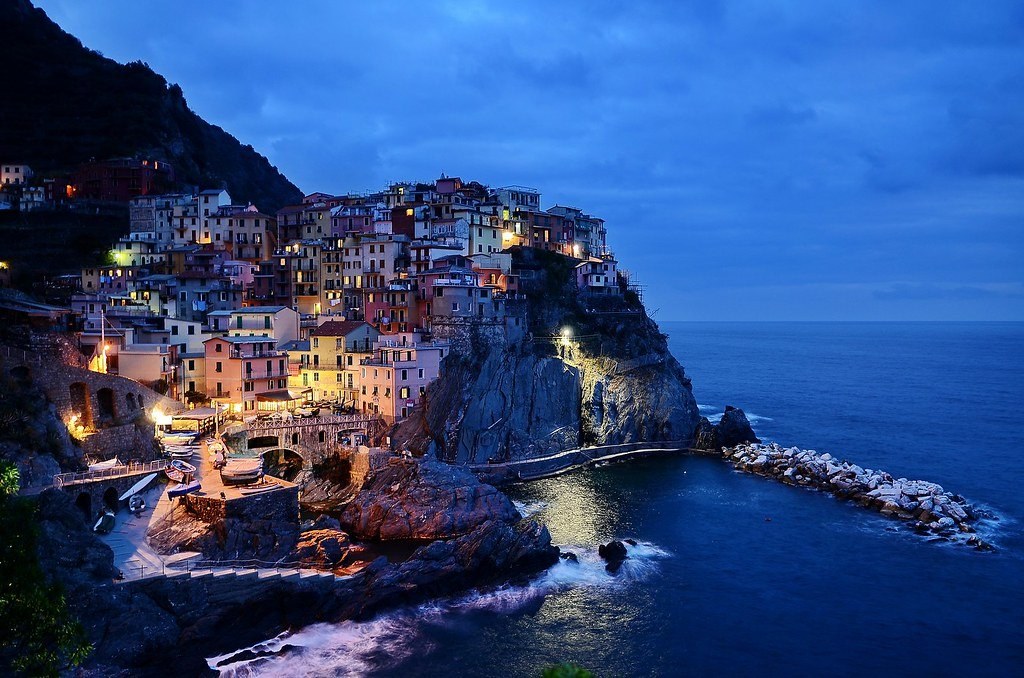
2. Manarola, Cinque Terre
The most photogenic of the five Cinque Terre villages, especially at blue hour when the pastel tower of houses lights up above the harbor. Swim off the rocks, hike the vineyard trail to Corniglia, and eat pesto where it was invented — Liguria. Base here or in Vernazza; the regional train links all five towns for a few dollars a ride.
Stake out Punta Bonfiglio — the little headland past the harbor playground — about 40 minutes before sunset for the exact view on every Liguria poster. Nessun Dorma, the cliff bar above the marina, does $14 spritzes and $16 bruschetta boards; join its app waitlist or line up before 5pm. Hiking? The Cinque Terre Treno card ($16–20 a day) covers the coastal trail and unlimited trains between the five villages.
READ MORE: 15 Hidden Gems in Europe That Don't Feel Real
3. Alberobello, Puglia
Fifteen hundred whitewashed trulli — cone-roofed stone huts — cluster into a town that looks borrowed from a storybook. Sleep inside one (trullo stays run $80–130) and explore the Rione Monti lanes at dawn before the buses arrive. Puglia remains one of Italy's best-value regions, and Alberobello is its crown jewel — it also stars in our list of hidden gems in Europe.
Ferrovie del Sud-Est trains run from Bari in about 90 minutes for $6 — arrive on a weekday morning and Rione Aia Piccola, the quieter residential trullo quarter, is nearly empty. Lunch at Trattoria Terra Madre: the vegetable antipasti parade runs about $30 and is a full meal in itself. Driving on? Locorotondo and Martina Franca are 15 minutes away and blissfully tourist-light.
4. San Gimignano, Tuscany
A skyline of 14 medieval towers rising from Tuscan vineyards — they called it the Manhattan of the Middle Ages. Climb Torre Grossa (about $10) for the view, sip the local Vernaccia white, and stay for the evening when the tour groups roll back to Florence. Gelateria Dondoli on the main square has world-champion gelato for around $4.
No car? Autolinee Toscane buses from Florence, with a quick change at Poggibonsi, take about 90 minutes for $9. Once the day-trip heat boils off, climb to the Rocca di Montestaffoli — the terrace is free, looks straight over the vineyards, and the wine experience inside pours Vernaccia tastings from $3. Sleeping inside the walls at Leon Bianco on Piazza della Cisterna ($90–120) buys you the towers at dawn, alone.
5. Varenna, Lake Como
Bellagio gets the crowds; Varenna gets the romance. A tiny fishing village of ochre houses, a lakeside lovers' walk, and gardens spilling wisteria into Lake Como. Ferries hop between Varenna, Bellagio, and Menaggio all day (about $5–17 depending on route), and the town is an easy 1-hour train from Milan — no car needed.
Trains leave Milano Centrale for Varenna-Esino roughly hourly — about $8 and 65 minutes; sit on the left for lake views. Tour Villa Monastero's two kilometers of lakefront gardens ($12), then walk the Passeggiata degli Innamorati at dusk when the lamps come on. For dinner, Il Cavatappi seats barely twenty people and its handmade pasta ($16–20) books out days ahead — reserve before you arrive.
READ MORE: Santorini Travel Guide: Everything You Need to Know
6. Civita di Bagnoregio, Lazio
"The dying city" sits on a crumbling pinnacle of volcanic rock, reachable only by a long pedestrian bridge (entry about $5). Inside: a handful of residents, flower-draped stone lanes, and silence you can hear. Go at golden hour when the whole outcrop glows amber above the canyon. It's 2 hours north of Rome and pairs perfectly with Orvieto.
Base in Orvieto: direct trains from Roma Termini take just over an hour ($9–12), and Cotral buses continue to Bagnoregio for about $3, with a $1 shuttle or 20-minute walk to the bridge. Inside, Osteria Al Forno di Agnese serves pici with wild boar ragu for around $15 on a pocket-sized terrace. Stay until the street lamps flick on — most visitors leave by 5pm, and evening on the bridge is the best photograph in Lazio.
7. Polignano a Mare, Puglia
White houses balanced on limestone cliffs above the clearest cove in the Adriatic. Lama Monachile beach, framed by a Roman-era bridge, is the money shot; the cliff-cave restaurant Grotta Palazzese is the splurge (dinner from about $200 — or just have an $8 aperitivo on a terrace with the same sea). June and September are perfect swimming months.
Trains from Bari take 30 minutes and cost about $3, so Polignano pairs with Alberobello in one easy day — better yet, sleep here. Claim your patch of Lama Monachile's pebbles before 9:30am in July, and bring water shoes. Then order a caffe speciale (espresso, cream, amaretto, lemon peel — about $2.50) at Il Super Mago del Gelo on Piazza Aldo Moro and walk the free clifftop path past the Domenico Modugno statue at sunset.
8. Taormina, Sicily
An ancient Greek theatre with Mount Etna smoking in the background, a corso lined with granita cafes, and cable-car access to beach coves below. Taormina is small-town Italy with a volcano for a backdrop. Try almond granita with brioche for breakfast (about $6) and book Isola Bella's pebble beach for the afternoon. April–June beats the summer heat.
Interbus coaches run direct from Catania airport in about 75 minutes for $9 — the taxi is $80. Book the Teatro Antico online ($14) for 9am or the final hour before closing; midday belongs to the cruise groups. The cable car down to Mazzaro costs $4 each way and pairs with a swim at Isola Bella ($5 to enter the reserve). For granita, locals send you to Bam Bar, just off Corso Umberto.
Turning this into an itinerary
With one week, pick two regions max: fly into Naples for the Amalfi Coast, or Bari for Puglia's white towns, and slow down enough to have a favorite bar by day two. Small-town Italy rewards lingering — the magic hours are early morning and after dinner, when the day-trippers are gone. Dreaming further afield? See how these towns compare to the whitewashed lanes in our Santorini travel guide.
A workable week in real numbers: fly into Bari, two nights in an Alberobello trullo ($90), one in Polignano ($85), then a $30–45 budget flight or train to Naples for three nights on the Amalfi Coast — our cheap flights guide covers scoring those hops. Or keep it northern: Milan, Varenna, Manarola, all on regionale trains with no seat reservations needed. Outside August, $120–150 a day covers a couple comfortably.
Best time to visit, month by month
May, June, and September are the golden windows everywhere on this list: warm enough to swim in Polignano's cove, cool enough to climb San Gimignano's towers, and rooms 30–40% below August rates. April brings wisteria to Varenna and thin crowds, though the Cinque Terre trails can still be muddy. July and August mean 95°F afternoons in Puglia and elbow-to-elbow lanes in Positano — if summer is your only option, go early morning and late evening and nap like an Italian in between. October is the sleeper hit: harvest festivals (sagre) fill Tuscan squares with $10 plates of new-pressed oil and porcini pasta, and Taormina stays swimmable into the month's first half. November through March is quiet and moody — Positano and Manarola half-close, but Civita di Bagnoregio in winter fog, floating above the valley, is a photograph you'll keep forever.
Eating well for less in small-town Italy
The small towns are where Italian food prices still make sense — if you follow the local playbook. Coffee at the bar counter costs $1.30–1.60; the same espresso at a piazza table can be triple, because you're renting the view. Lunch is the value meal: many trattorias run a fixed pranzo menu at $13–18 for two courses and wine. The coperto ($2–3 per person) on your bill is normal, not a scam — it covers bread and the tablecloth, and it also means no tip is expected beyond rounding up. And from about 6pm, an $8–12 aperitivo spritz in towns like San Gimignano or Taormina often comes with enough snacks to soften dinner. For the full playbook, see our guide to eating cheap and well in Europe.
Common mistakes to avoid
- Driving into a ZTL. Most historic centers are camera-enforced restricted traffic zones; one wrong turn in San Gimignano or Positano's center means a $90–120 fine mailed home months later. Park in the signed lots outside the walls ($2–3 an hour) and walk in.
- Not validating regional train tickets. Paper regionale tickets must be stamped in the small green machines before boarding — inspectors fine around $55 on the spot, no exceptions for tourists.
- Fighting the riposo. Shops and many sights close roughly 1–4pm. Plan lunch, a swim, or a nap — the towns reopen beautifully for the evening passeggiata.
- Showing up hungry at 6pm. Kitchens open for dinner around 7:30–8pm. That awkward gap is exactly what aperitivo was invented for.
- Trusting the GPS blindly in Puglia and Tuscany. "Shortcuts" can be white gravel roads between olive groves. Scenic, yes. Fast, no.
Frequently asked questions
Do I need to rent a car?
Not for Manarola, Varenna, Positano, or Taormina — trains, ferries, and the Amalfi SITA bus ($2–3) do the work, and parking in those towns is misery anyway. A car earns its $45–65 a day in rural Tuscany and inland Puglia, where the joy is the wandering between towns.
How many towns fit in one week?
Three bases, comfortably — say Positano, Alberobello, and one wildcard — with two nights minimum in each. The whole point of small-town Italy is being there at 7am and 10pm, when the day-trippers aren't.
Will I need Italian?
English gets you through everywhere touristed, but small-town Italy melts for effort. A confident buongiorno walking into any shop, and un cappuccino, per favore, will upgrade your service instantly and cost you nothing.
Which town should a first-timer pick?
If you want the sea, Manarola — car-free, train-connected, and postcard-perfect within five minutes of arriving. If you want wine and hills, San Gimignano, with Siena and Volterra an easy bus hop away. Both forgive planning mistakes, both are safe and walkable, and both will ruin big-city Italy for you a little.
Are these towns expensive to sleep in?
Positano and Varenna are the splurges ($150+ in season). The rest are gentle: $70–110 buys a lovely double in Alberobello, San Gimignano, or Taormina in shoulder season, and agriturismi just outside the walls charge less and feed you like family. More stretching strategies live in our Europe on a budget guide.